Night Windows Beside a Reading Lamp
The reading lamp changes the meaning of the rainy street before it changes anything inside the frame. In an entrance hall, Night Windows 01 accompanies arriving and leaving. Beside a chair after sunset, the same picture becomes a view to stay with: amber windows, dark buildings and broken reflections beyond the comfortable pool of light. It is still an invented city painting, and the person under the small umbrella is still going somewhere. You are allowed to remain in the chair.
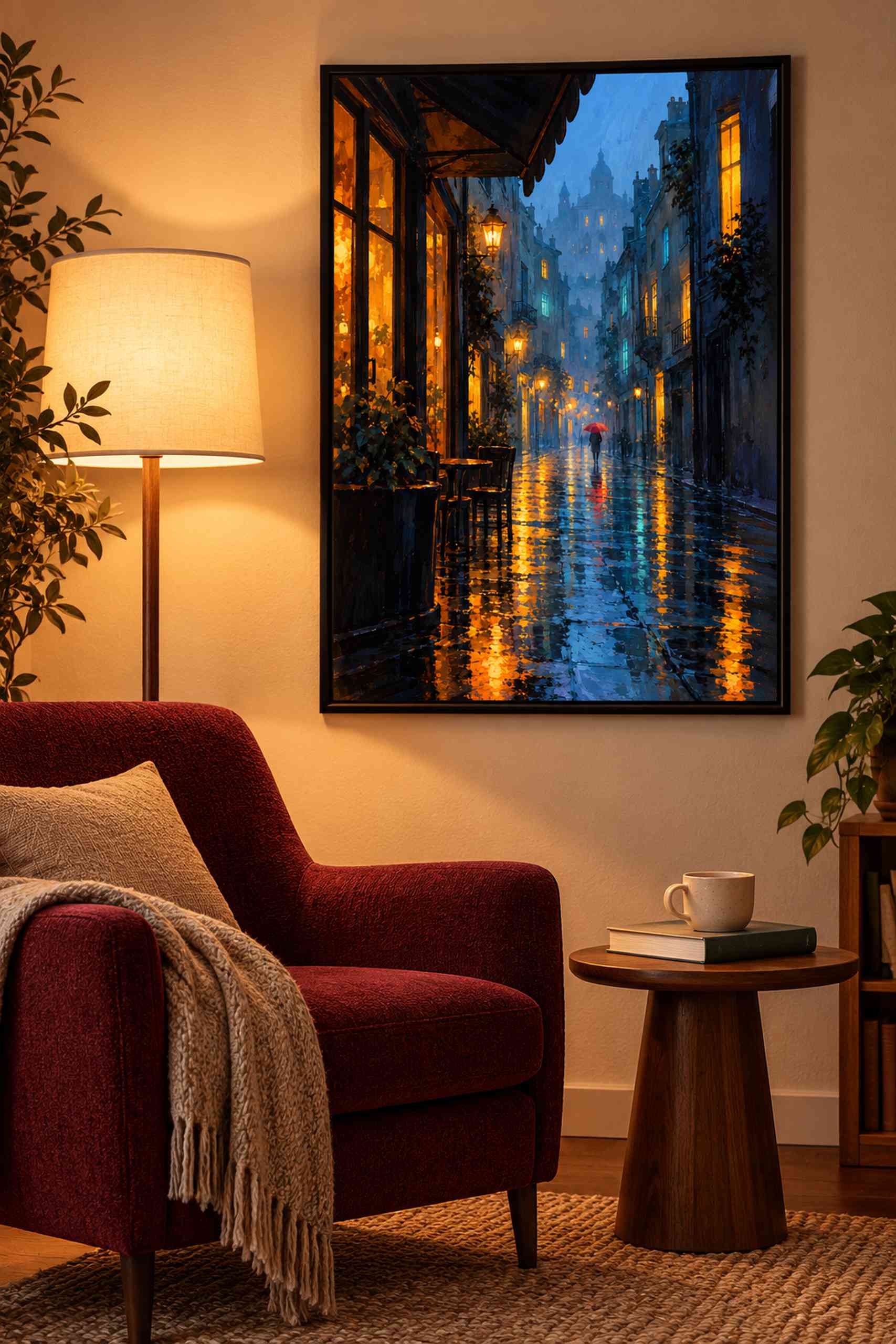
The room concept pairs the poster with a deep-colored armchair, a low wood table and a shaded lamp. There are a couple of books and room for an ordinary cup, rather than a surface filled with objects chosen to repeat the picture. The narrow black frame sits against a warm pale wall. The lamp supplies a broader warm area nearby, while the painted windows create smaller points of amber within the blue street. That relationship is the reason to try the work here. It does not depend on reproducing a complete cinematic room around the scene.
The illustration is a proposal, not a test of a particular lamp, glazing product or print. In an actual corner, the first practical question is where the lamp is reflected from the seat. A picture can be beautifully lit on its surface yet difficult to see through a bright patch on the glazing. Look from the position where you read, not only from the spot directly in front of the wall. Try the lamp in its normal operating position and check other lights used in the evening. Moving a source sideways may change the reflection more usefully than shifting the picture higher. The particular geometry of the room decides what happens.
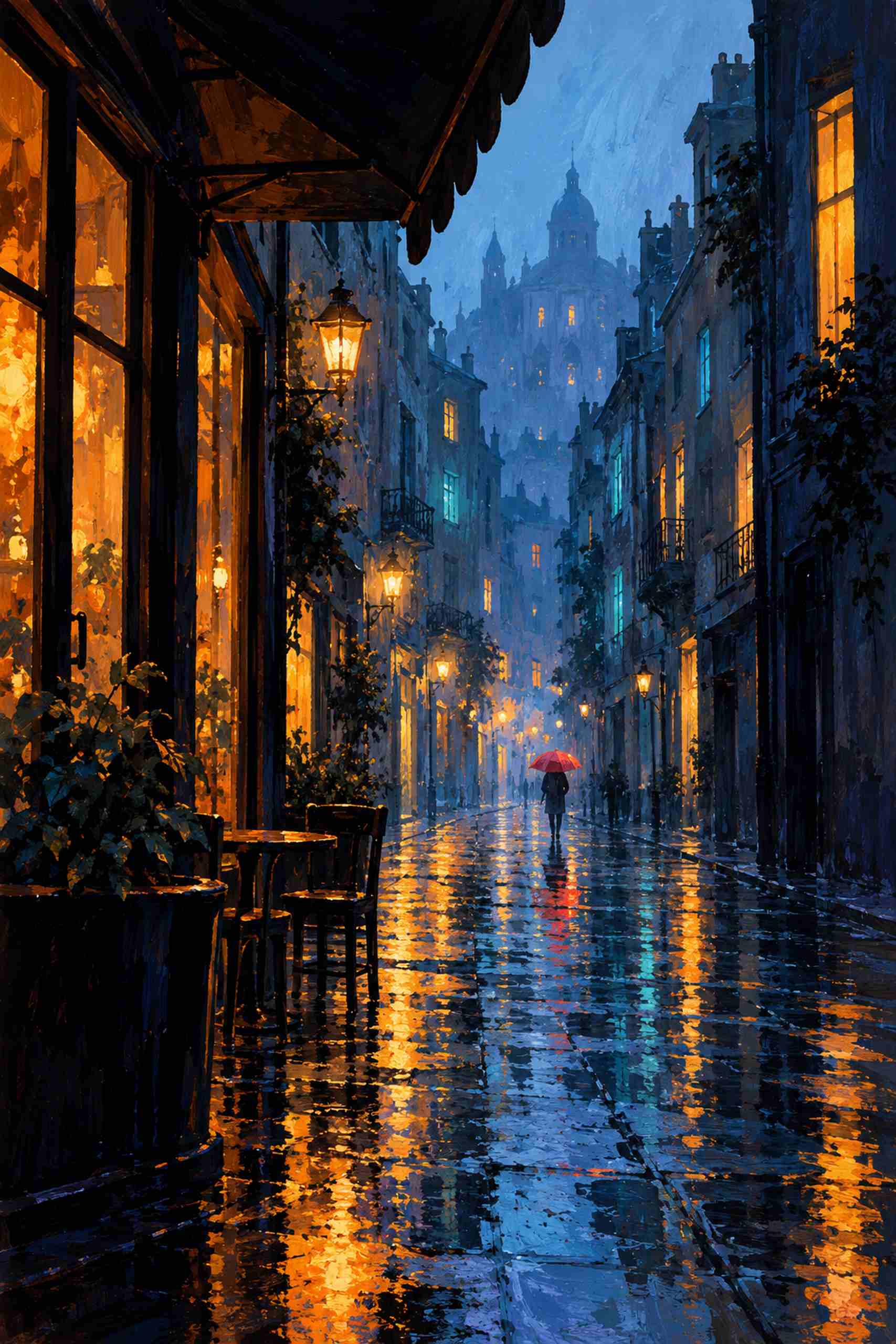
The flat preview is the reference for the painted scene. Warm window shapes gather beside the darker building edges, and the wet street breaks those colors into a more restless pattern below. The small umbrella gives the view a point of human attention without becoming its largest object. That detail was already present when the work appeared in the entrance hall. Reusing the exact design lets the new room explain something the earlier setting did not: how the picture can participate in an evening arrangement built around one chair and one light rather than a route through the home.
I would keep the frame relatively narrow. A thick dark border would make a larger solid object beside the chair, while a pale frame would separate the blue painting more clearly from the warmer room. The black edge in this concept makes a useful connection with the picture’s deep shadows without needing to match the furniture. A generous mat is another possibility, but it changes the outside footprint and gives the image more visual distance. Before choosing it, test whether the corner needs that additional pale area or whether the wall already supplies enough separation. More framing is not automatically more presence.
The position should work for the person who actually uses the chair. If the picture is immediately behind your head, it may matter more to the view from the doorway than to the experience of sitting there. A wall slightly across from the seat can be worth considering, provided it remains clear of the lamp’s movement and normal circulation. Use the intended outside frame dimensions for a paper template. No measurements in this room should be inferred from the AI-generated image. Check the everyday arrangement, including a raised footrest or an open door if those are part of using the corner.
Night Windows does not promise a mood, a better sleep routine or improved concentration. It offers an atmospheric scene that some people will enjoy beside a reading light. Printed blues and warm highlights should be judged with a sample under the actual lamp, since a screen image is not a physical color proof. I would begin with the furniture already present and allow the painting to make the more dramatic contribution. A room can remain simple and still hold a picture full of weather. The chair, meanwhile, can get on with being comfortable.